How to Read a Nutrition Label: 7 Glances in Order
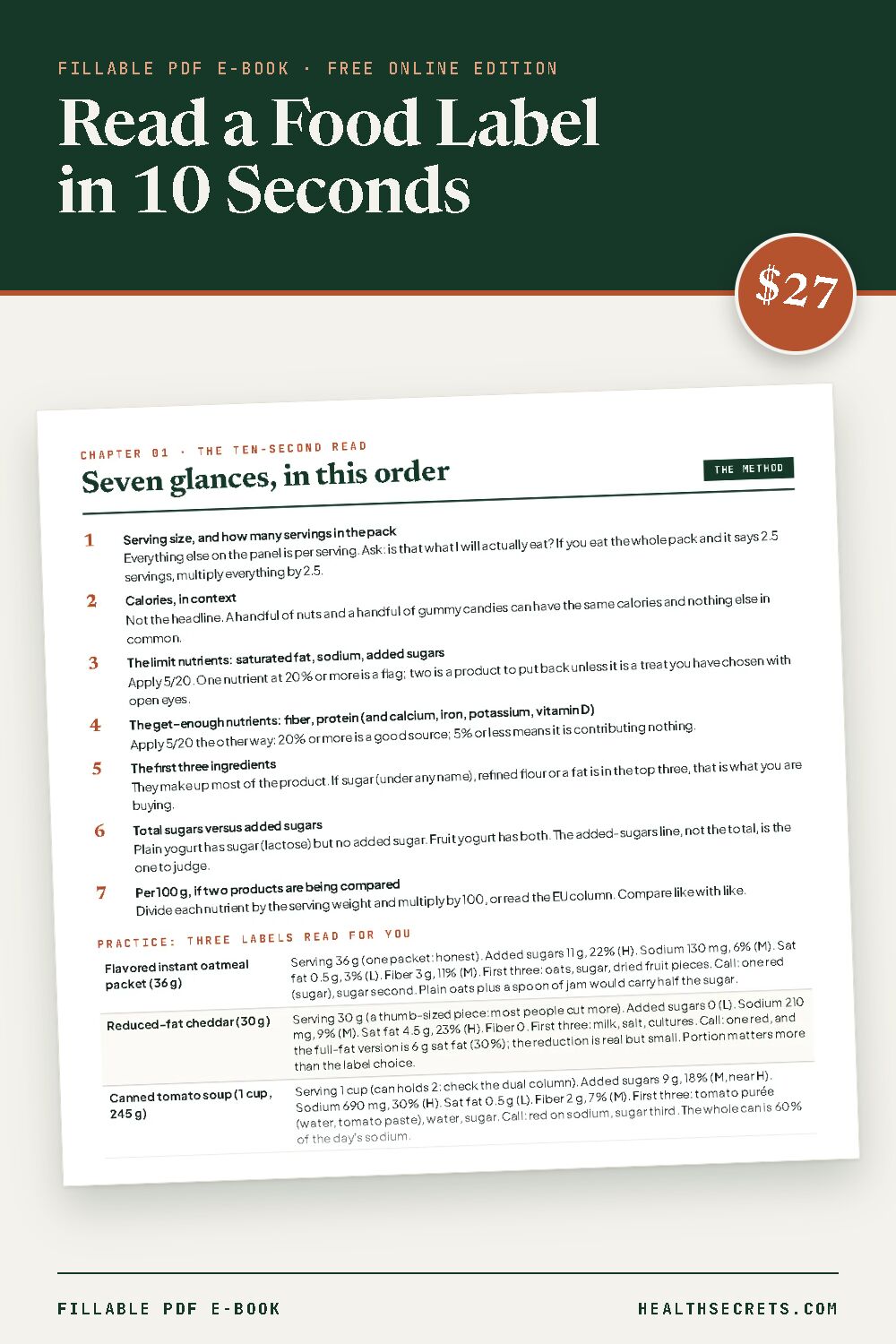
The ten-second read: seven glances at the Nutrition Facts panel, in the order that matters, so you know what to check first at the shelf.

Edit everything into your own voice. Keep the disclosure and the "not medical advice" line, and add no results, ratings or health claims.
Download the image, copy the text, and use your link as the pin's destination. Add a disclosure such as #ad.
The ten-second read: seven glances at the Nutrition Facts panel, in the order that matters, so you know what to check first at the shelf.
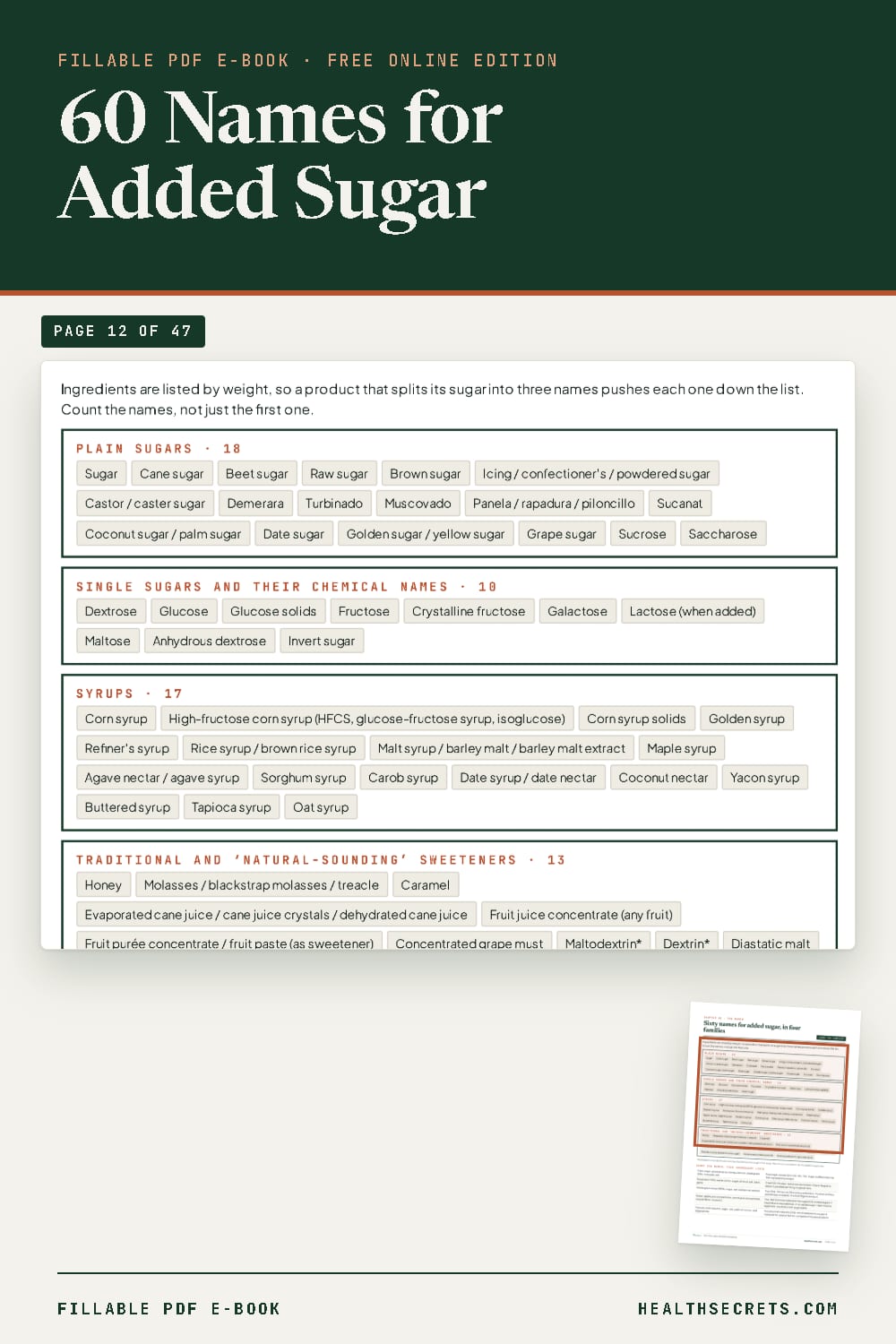
Sixty names for added sugar, grouped into four families, so you can spot them in any ingredient list.
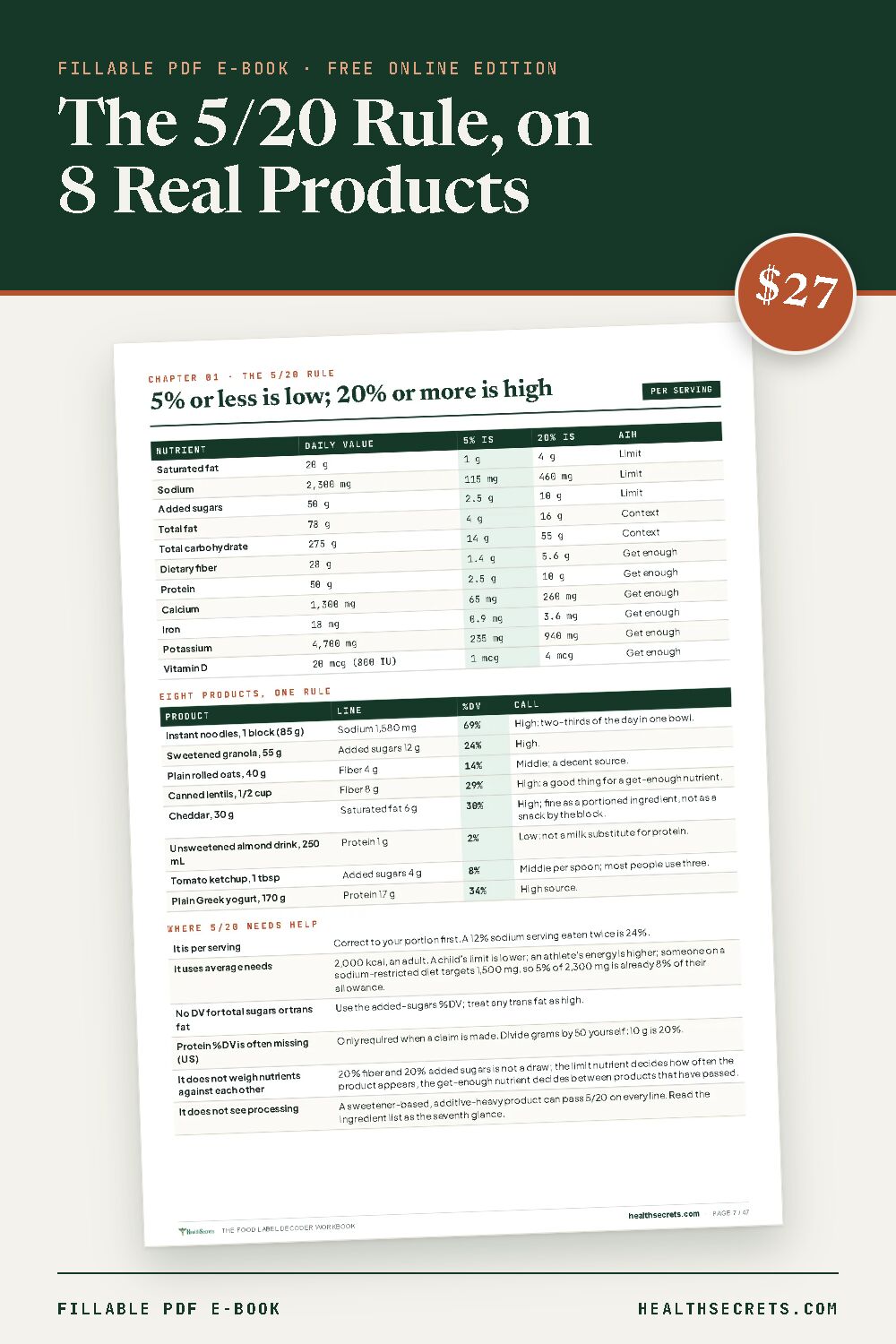
5% Daily Value or less is low, 20% or more is high. The rule applied to eight products, with every Daily Value listed.
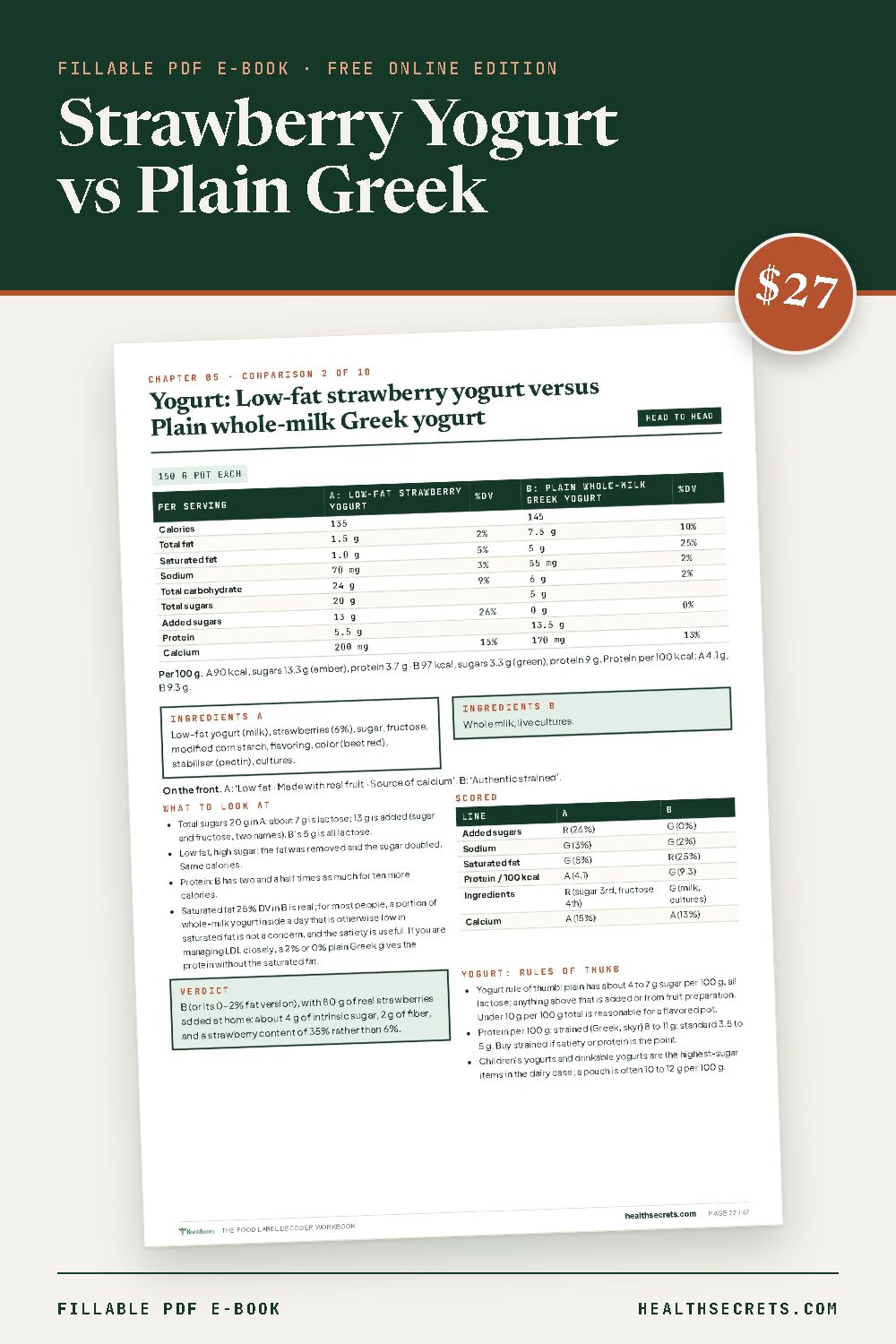
One of ten side-by-side shelf comparisons in the workbook: two yogurts, label by label.
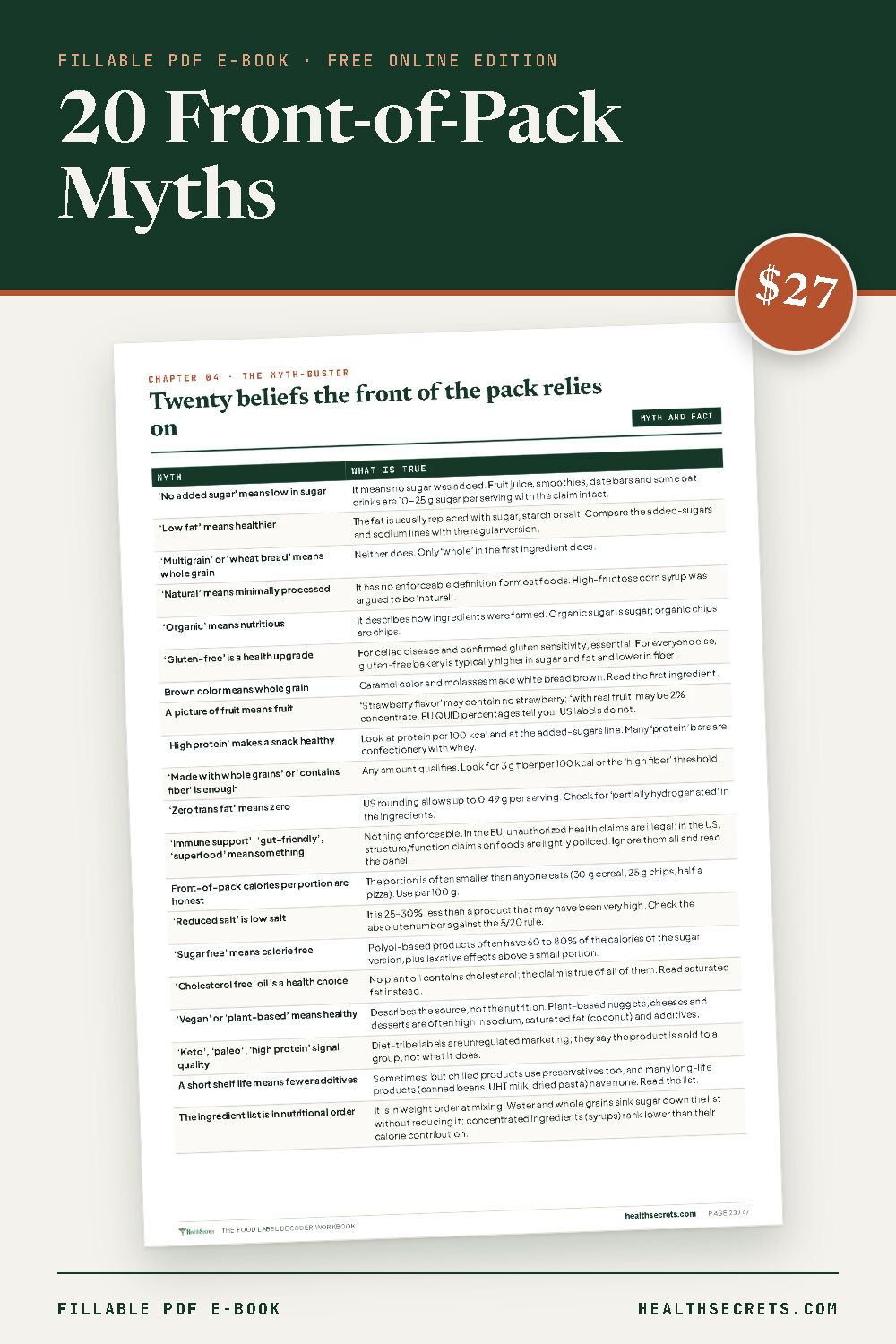
Twenty beliefs that front-of-pack claims rely on, set against what the label itself says.
Hi [First Name],

You stand in the aisle comparing two boxes and still do not know which to buy.

The front says "made with whole grain" or "natural", and you do not know what that really means.

That is why I want to show you Food Label Decoder Workbook from Health Secrets. The ten-second read, the 5/20 rule with six calculators, 60 names for added sugar and ten shelf comparisons.

It is a 47-page fillable PDF e-book with a free online edition, and a 60-day money-back guarantee.

See it here: https://www.digistore24.com/redir/733190/AFFILIATE/

It is an educational and organizational tool, not medical advice. Talk to your doctor about your own health.

[Your Name]

P.S. I earn a commission if you buy through this link, at no extra cost to you.
Hi [First Name],

I looked through Food Label Decoder Workbook from Health Secrets, and here is what you get:

• The Ten-Second Read: Seven glances in order: serving size, calories, the three nutrients to limit, the nutrients to get enough of, the first three ingredients, total versus added sugars, and per 100 g.
• The 5/20 Rule and Label Math: 5% Daily Value or less is low, and 20% or more is high. A worksheet does the percent for your own products. Divide sugar grams by 4 for teaspoons. Multiply sodium by 2.5 for salt.
• Sugar, Decoded: Added, total and free sugar made plain. 58 names for added sugar in four families, a teaspoon converter, and where sugar hides in everyday foods. A 330 mL cola has 35 g, nearly 9 teaspoons.
• Ingredients, Fats, Sodium, Fiber: How ingredient lists work, which fats to look for, where sodium comes from, what counts as fiber, plus ten sweeteners and eight additives in plain words.
• The Front-of-Pack Myth-Buster: What 14 US claims and 10 EU claims legally mean, such as "low fat" and "free". Then 20 common beliefs that the front of the pack relies on, checked one by one.

It is a 47-page fillable PDF e-book with a free online edition, and a 60-day money-back guarantee.

See it here: https://www.digistore24.com/redir/733190/AFFILIATE/

It is an educational and organizational tool, not medical advice. Talk to your doctor about your own health.

[Your Name]

P.S. I earn a commission if you buy through this link, at no extra cost to you.
Hi [First Name],

A quick note on who Food Label Decoder Workbook suits.

It is a good fit for:

• Shoppers who want to judge a product from the back of the pack, not the front.
• People asked by a doctor or dietitian to watch sugar, salt or saturated fat.
• Parents and grandparents buying cereal, yogurt and snacks for children.
• Anyone who wants a method that works without an app or a phone.
• People who buy foods with both US and EU labels. The book covers both.

Good to know before you buy:

• It is not a diet or a meal plan. It teaches you to read labels.
• If your doctor or dietitian set limits for you, for kidney disease or diabetes for example, follow theirs. Use the book to find those numbers on the pack.
• If you have a food allergy or celiac disease, always read the full label and follow your doctor's advice. The book's rules of thumb do not replace it.
• It does not rate brands. The comparisons use typical values, not named products.

Here is how it works:

• Learn the read: Take the seven glances in order on one box from your cupboard. Then practice on the worked examples.
• Audit your cupboard: List the ten products you buy most. Mark sugar, sodium and saturated fat green, amber or red.
• Swap two products: Find one better choice in the same category. Try it for a week. Repeat the audit in three months.

It is a 47-page fillable PDF e-book with a free online edition, and a 60-day money-back guarantee.

See it here: https://www.digistore24.com/redir/733190/AFFILIATE/

It is an educational and organizational tool, not medical advice. Talk to your doctor about your own health.

[Your Name]

P.S. I earn a commission if you buy through this link, at no extra cost to you.
For Shoppers Stuck in the Aisle: Read Any Food Label in Ten Seconds

If you stand in the aisle comparing two boxes and still do not know which to buy, this may be for you.

If you look for sugar on the ingredient list, but it hides under other names, this may be for you.

Seven glances in order, the 5/20 rule, 58 names for added sugar, the legal meaning of front-of-pack claims, and ten side-by-side shelf comparisons.
You stand in the aisle comparing two boxes and still do not know which to buy.

Food Label Decoder Workbook is the most practical thing I have seen for this. The ten-second read, the 5/20 rule with six calculators, 60 names for added sugar and ten shelf comparisons.

• The Ten-Second Read
• The 5/20 Rule and Label Math
• Sugar, Decoded

It is a 47-page fillable PDF e-book with a free online edition, and a 60-day money-back guarantee.

https://www.digistore24.com/redir/733190/AFFILIATE/

#ad I earn a commission if you buy through this link. Educational tool, not medical advice.
For Shoppers Stuck in the Aisle: Read Any Food Label in Ten Seconds

The ten-second read, the 5/20 rule with six calculators, 60 names for added sugar and ten shelf comparisons.

Inside:
• The Ten-Second Read
• The 5/20 Rule and Label Math
• Sugar, Decoded
• Ingredients, Fats, Sodium, Fiber

Link in bio.

#ad Educational tool, not medical advice.

#healthplanner #healthyliving #printables #healthsecrets
For Shoppers Stuck in the Aisle: Read Any Food Label in Ten Seconds

Food Label Decoder Workbook: 47-page PDF e-book with a free online edition.

https://www.digistore24.com/redir/733190/AFFILIATE/

#ad
Food Label Decoder Workbook: Seven glances in order, the 5/20 rule, 58 names for added sugar, the legal meaning of front-of-pack claims, and ten side-by-side shelf comparisons. It is a 47-page fillable PDF e-book with a free online edition, and a 60-day money-back guarantee. https://www.digistore24.com/redir/733190/AFFILIATE/

This is an affiliate link: I earn a commission at no extra cost to you.
Hook (3 seconds): For Shoppers Stuck in the Aisle: Read Any Food Label in Ten Seconds

Problem (10 seconds): You stand in the aisle comparing two boxes and still do not know which to buy.

Show it (30 seconds): open the online edition from your preview link and scroll through:
• The Ten-Second Read
• The 5/20 Rule and Label Math
• Sugar, Decoded

Close (5 seconds): It is a 47-page fillable PDF e-book with a free online edition, and a 60-day money-back guarantee. The link is in the description.

Description: https://www.digistore24.com/redir/733190/AFFILIATE/
#ad I earn a commission if you buy through this link. Educational tool, not medical advice.
Title idea: Food Label Decoder Workbook review: what is inside, and who it suits

1. Who I am and why I looked at it. Disclose the affiliate link here.
2. The problem:
• You stand in the aisle comparing two boxes and still do not know which to buy.
• The front says "made with whole grain" or "natural", and you do not know what that really means.
• You look for sugar on the ingredient list, but it hides under other names.
3. What is inside, with your own screenshots from the preview link:
• The Ten-Second Read
• The 5/20 Rule and Label Math
• Sugar, Decoded
• Ingredients, Fats, Sodium, Fiber
• The Front-of-Pack Myth-Buster
• Ten Comparisons and Your Cupboard
4. How it works:
• Learn the read
• Audit your cupboard
• Swap two products
5. Who it suits:
• Shoppers who want to judge a product from the back of the pack, not the front.
• People asked by a doctor or dietitian to watch sugar, salt or saturated fat.
• Parents and grandparents buying cereal, yogurt and snacks for children.
• Anyone who wants a method that works without an app or a phone.
• People who buy foods with both US and EU labels. The book covers both.
6. Good to know first:
• It is not a diet or a meal plan. It teaches you to read labels.
• If your doctor or dietitian set limits for you, for kidney disease or diabetes for example, follow theirs. Use the book to find those numbers on the pack.
• If you have a food allergy or celiac disease, always read the full label and follow your doctor's advice. The book's rules of thumb do not replace it.
• It does not rate brands. The comparisons use typical values, not named products.
7. Format and guarantee: It is a 47-page fillable PDF e-book with a free online edition, and a 60-day money-back guarantee.
8. Your honest opinion, then the link: https://www.digistore24.com/redir/733190/AFFILIATE/
The cover, real pages and photos, for your posts and reviews.
 Cover
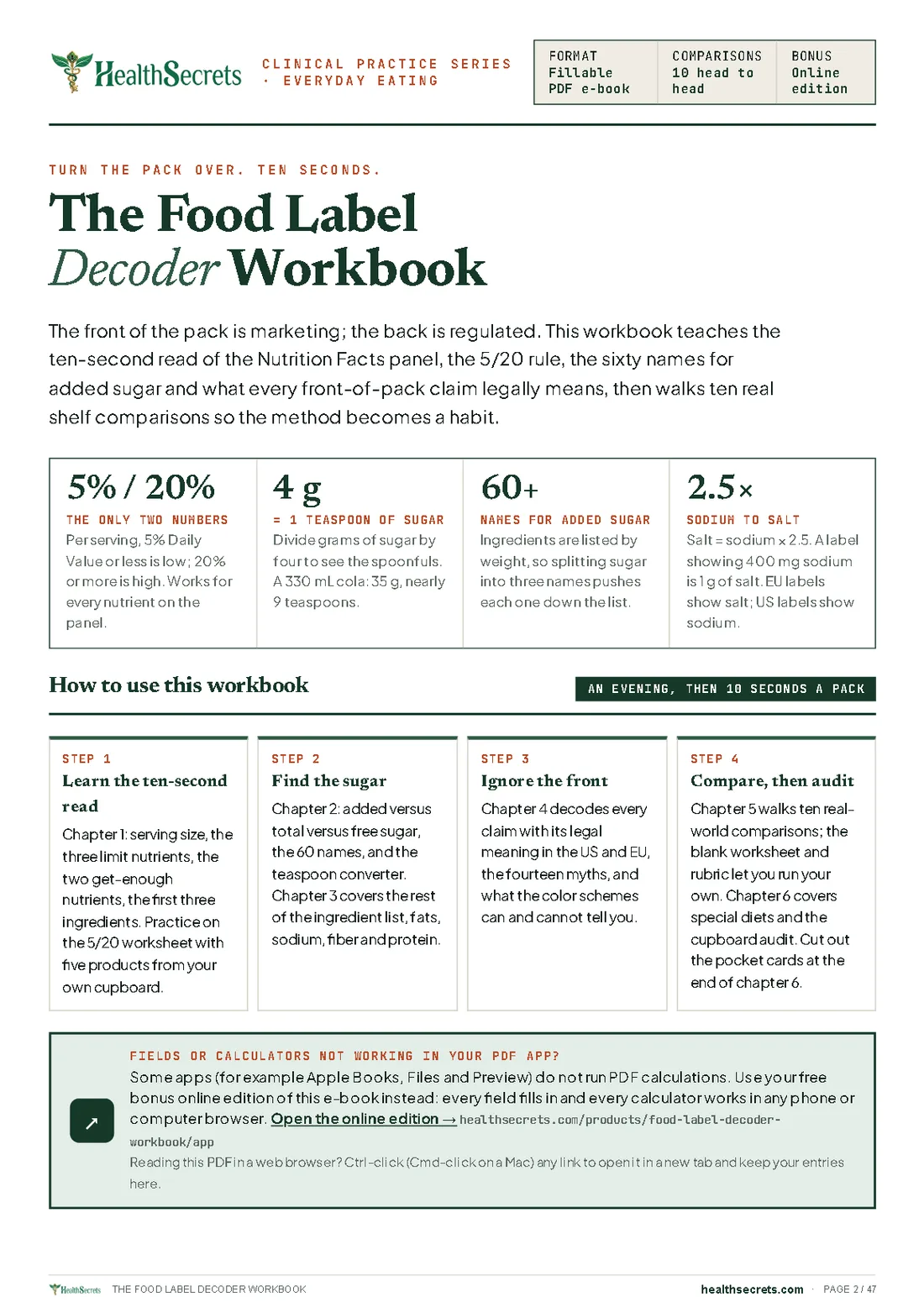 The idea, the five numbers, and how to use the workbook
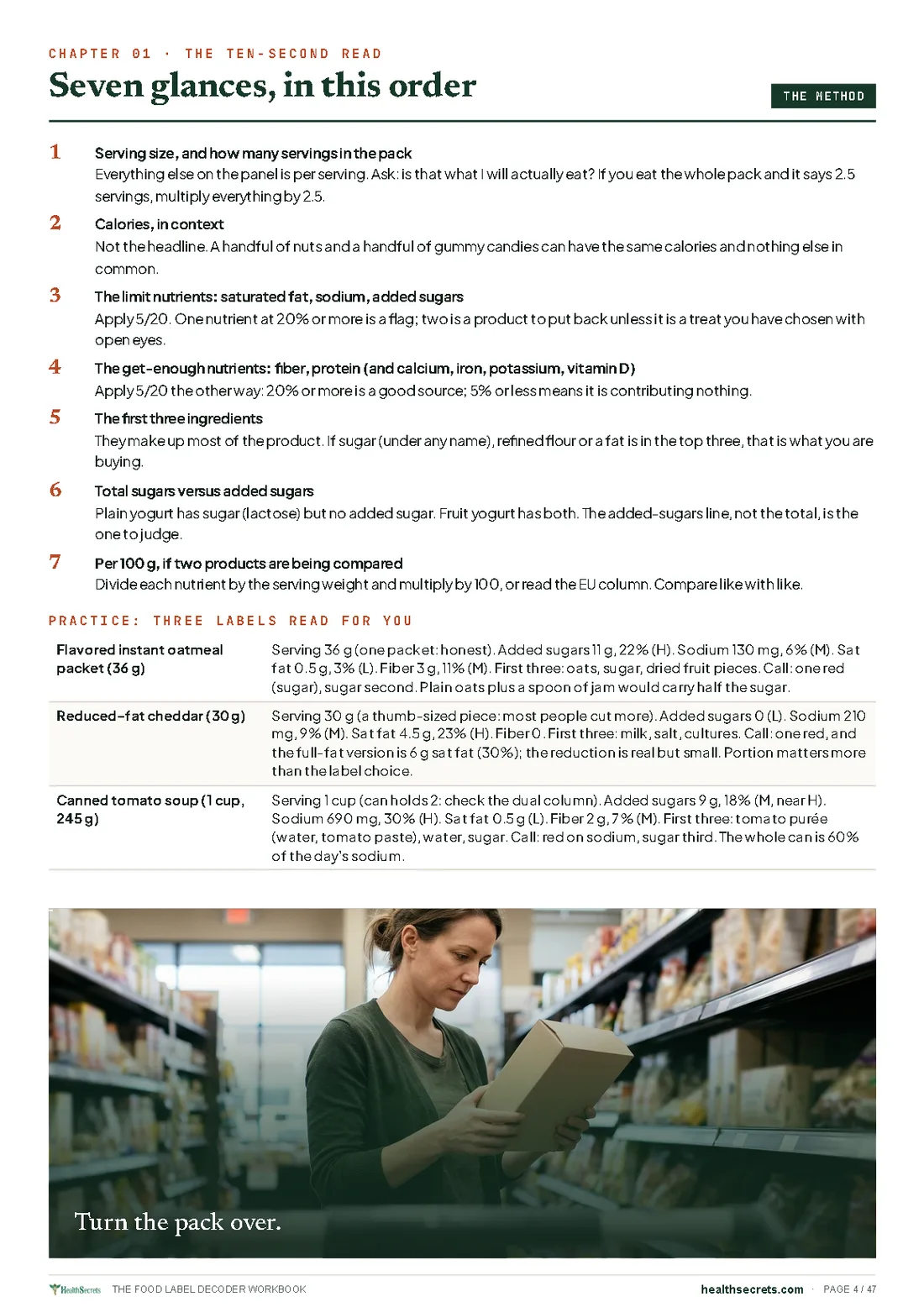 The ten-second read: seven glances, in order
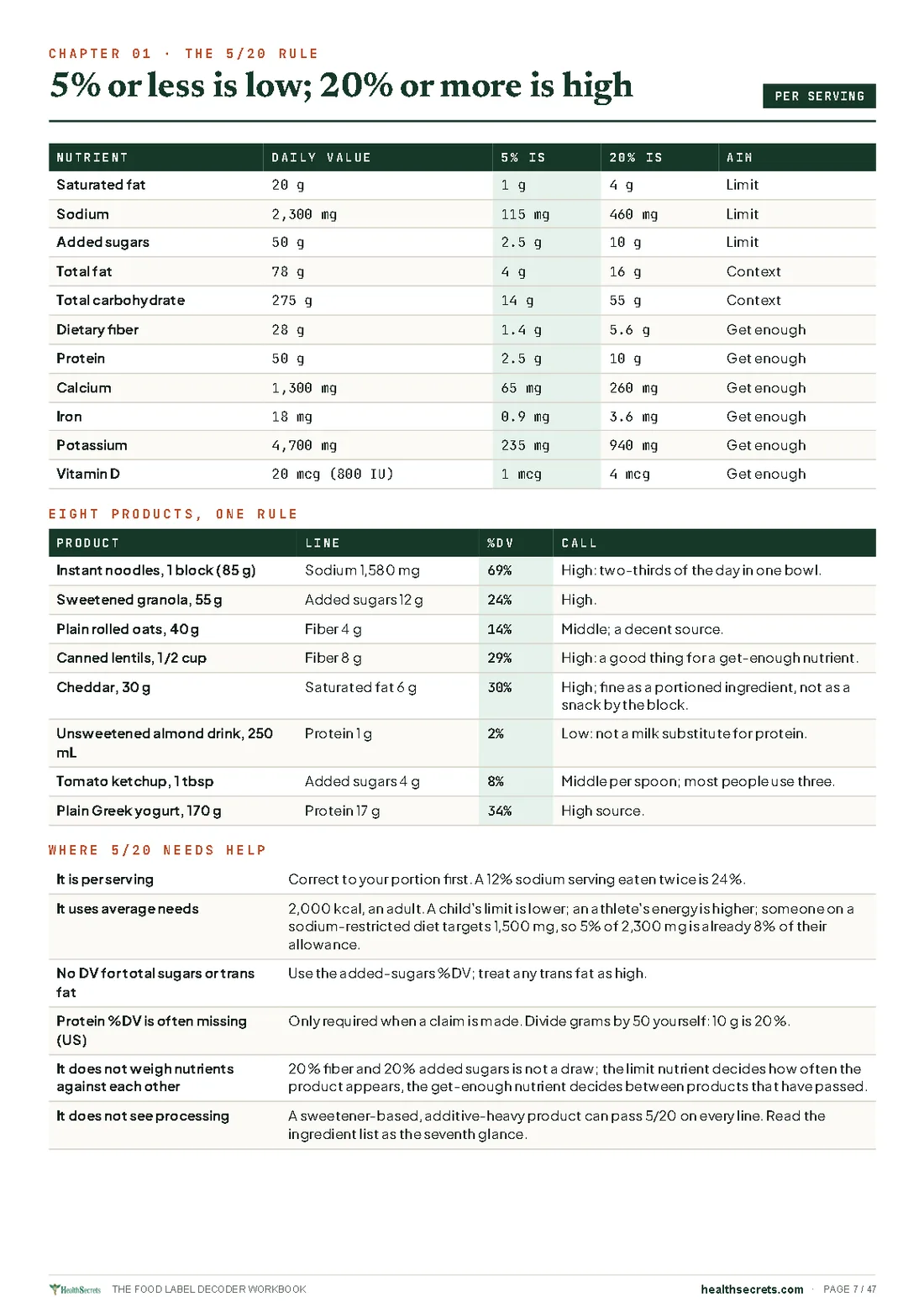 The 5/20 rule with every Daily Value, on eight products
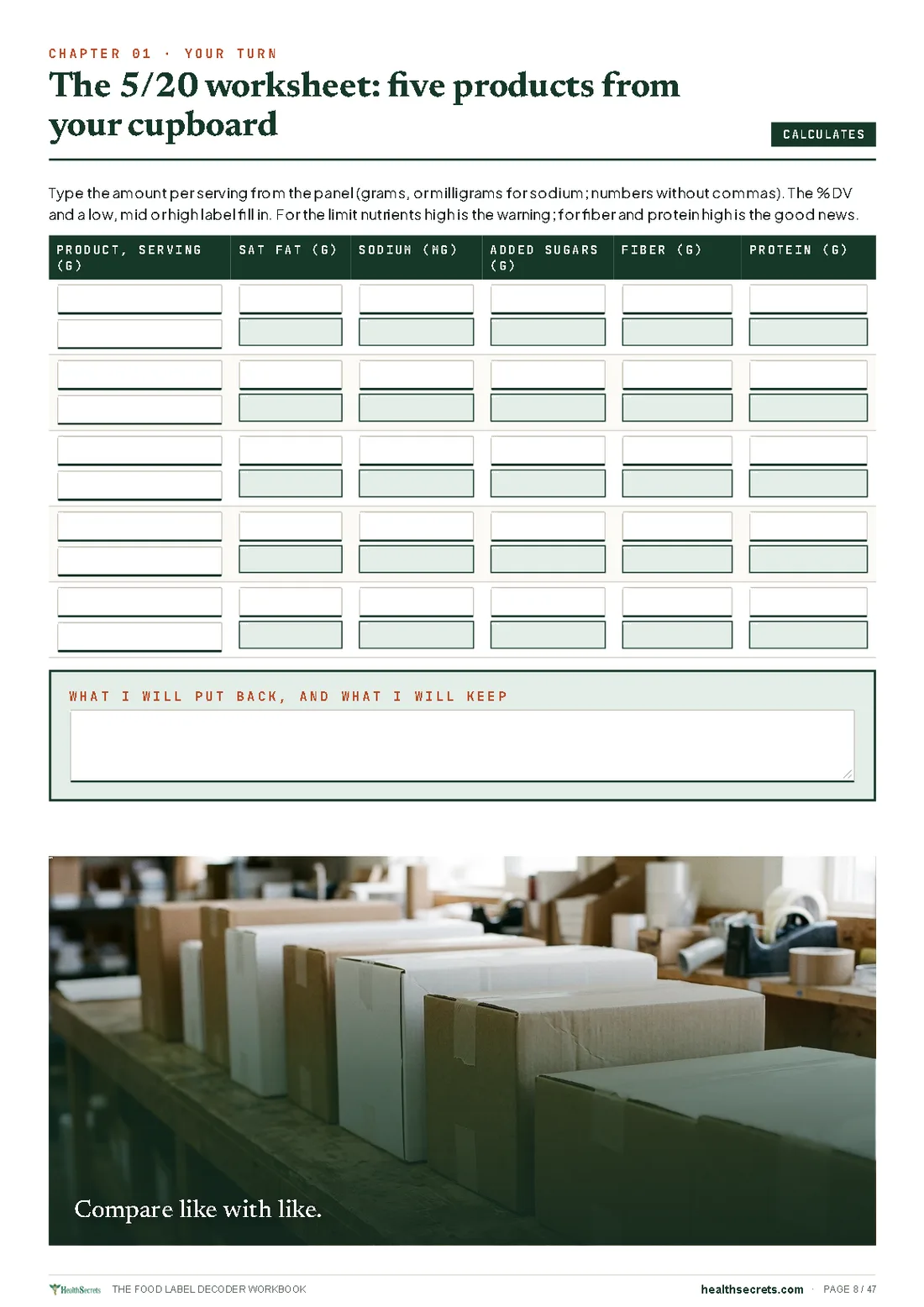 The 5/20 worksheet: your products, %DV calculated
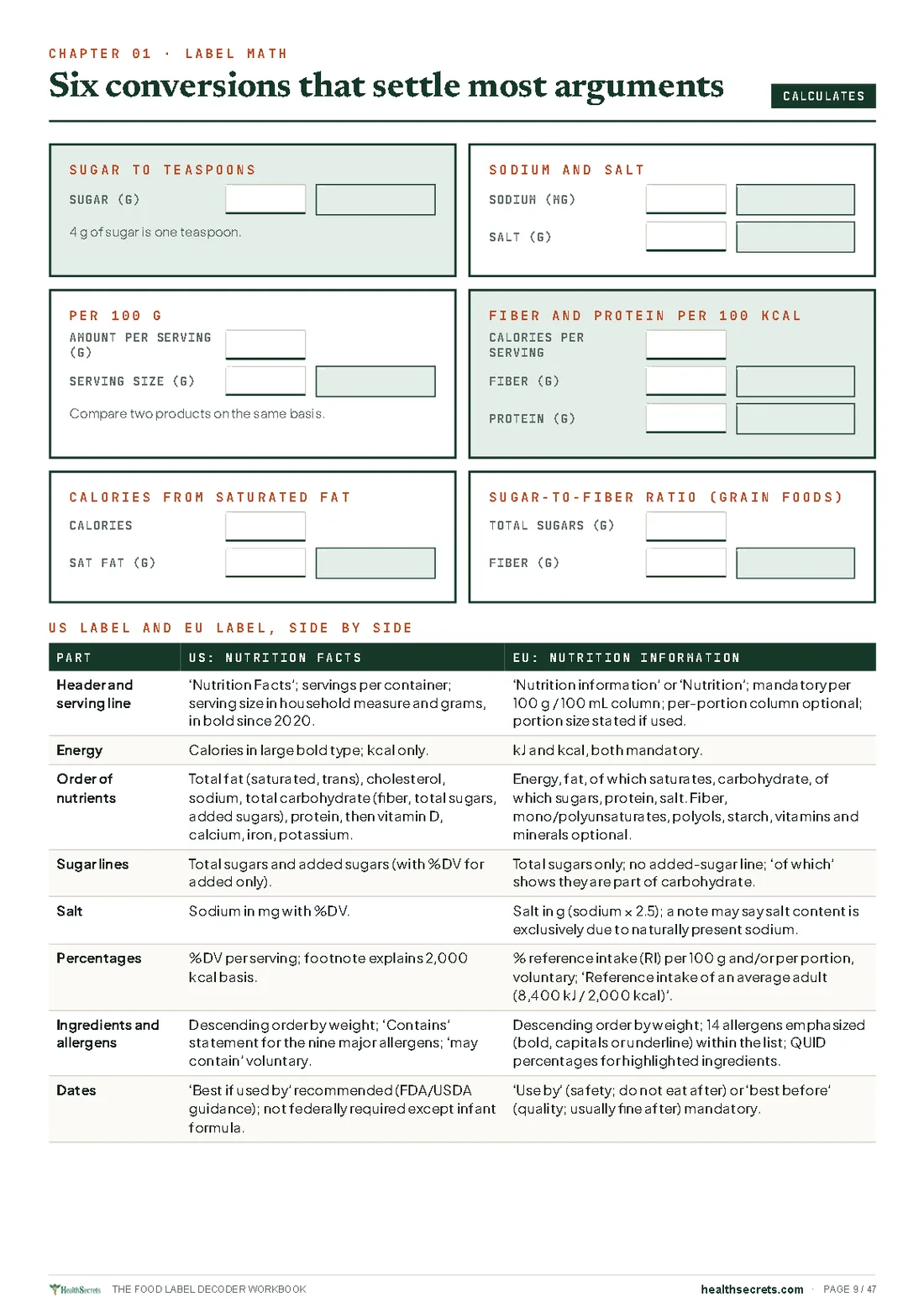 Label math: teaspoons, salt, per 100 g, per 100 kcal
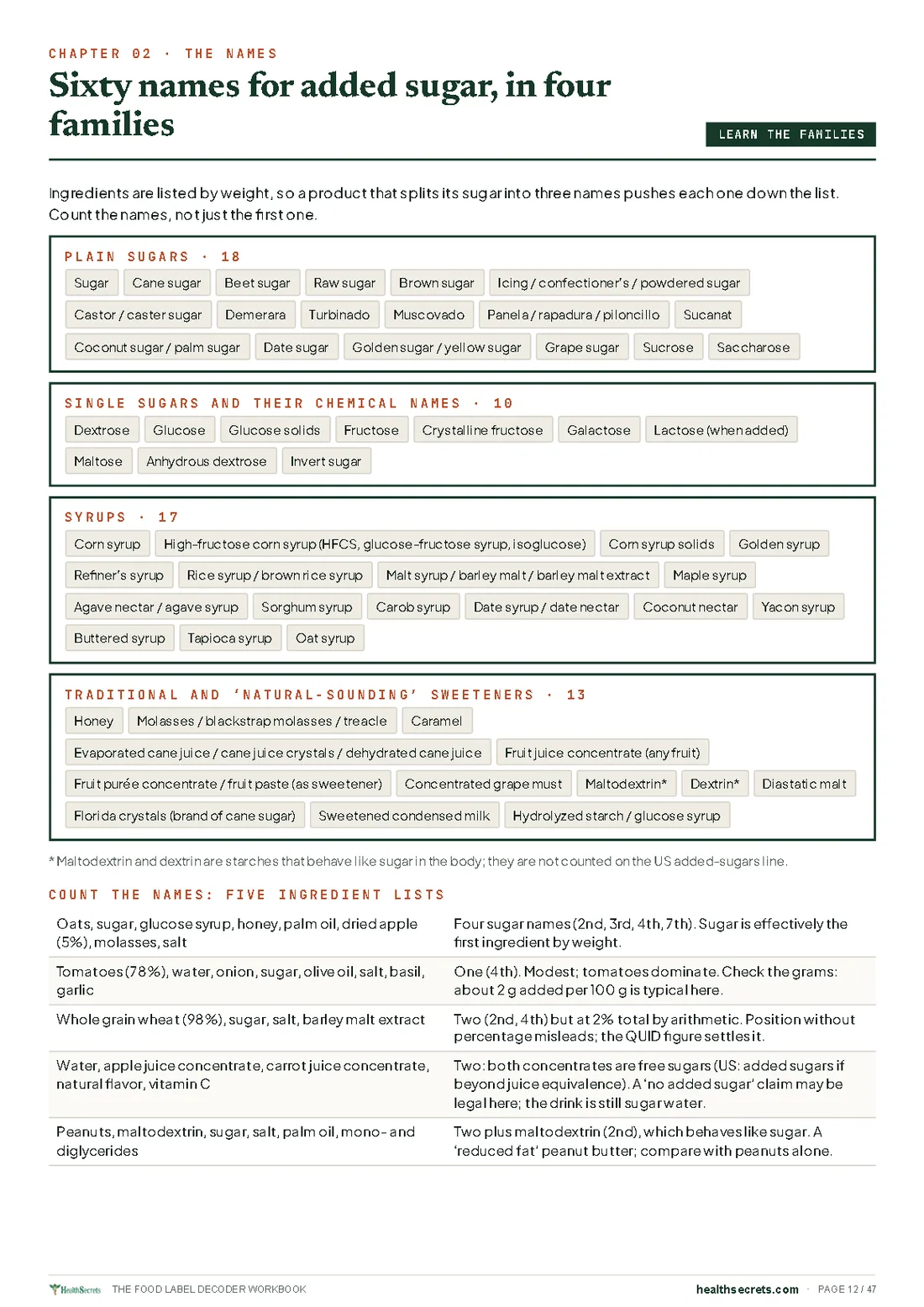 Sixty names for added sugar, in four families
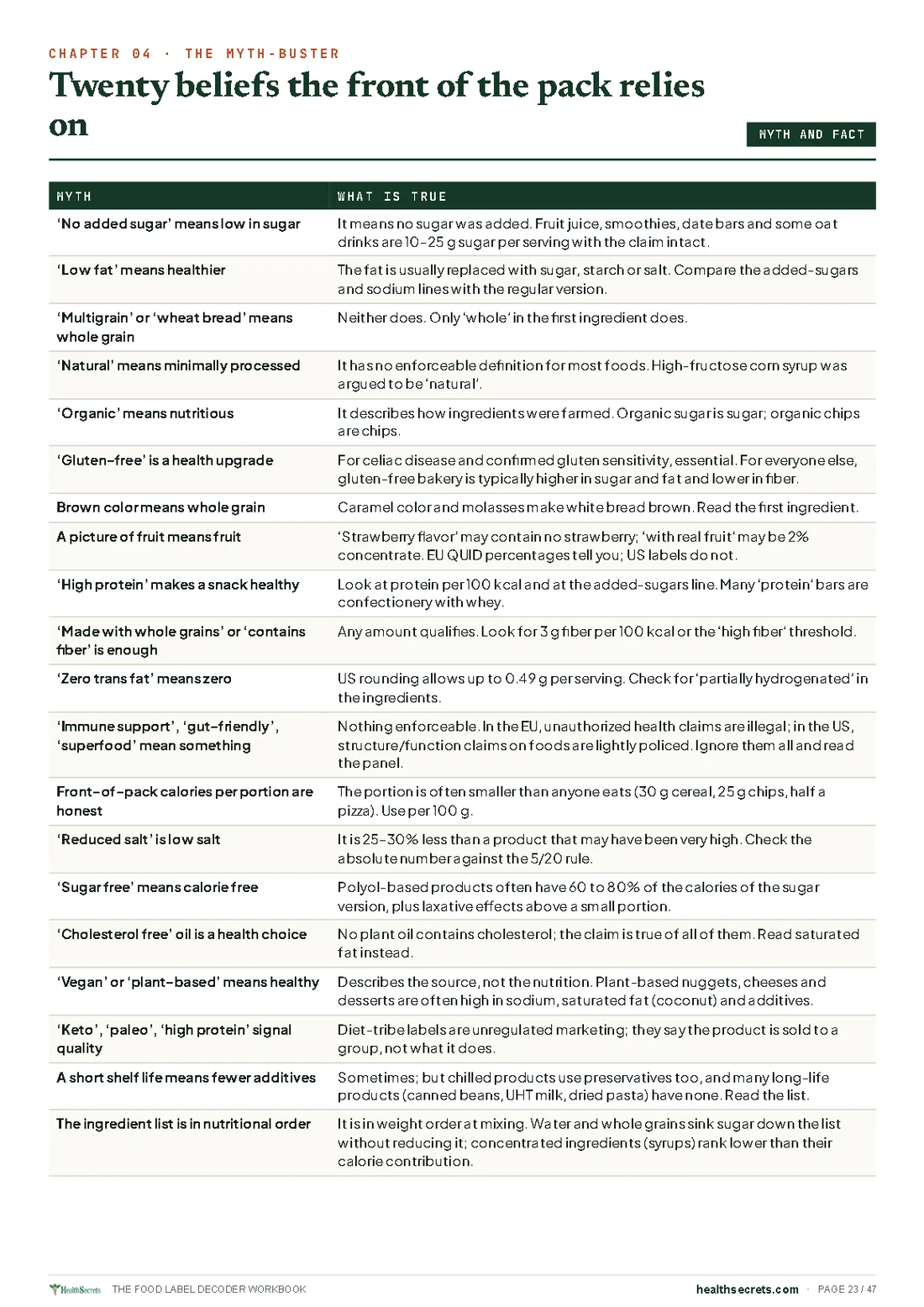 The myth-buster: twenty beliefs the front of the pack relies on
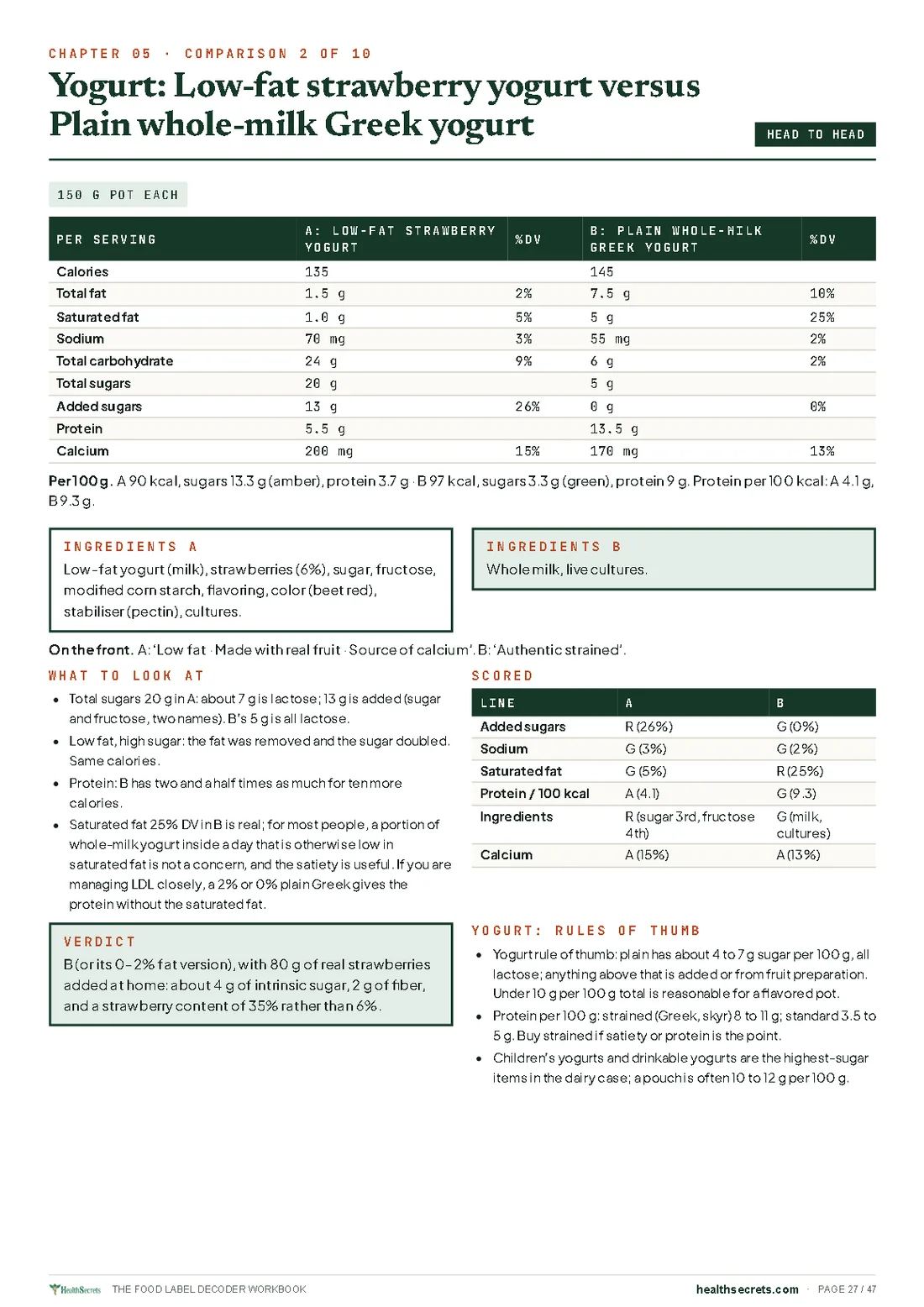 Comparison 2 of 10: strawberry yogurt versus plain Greek
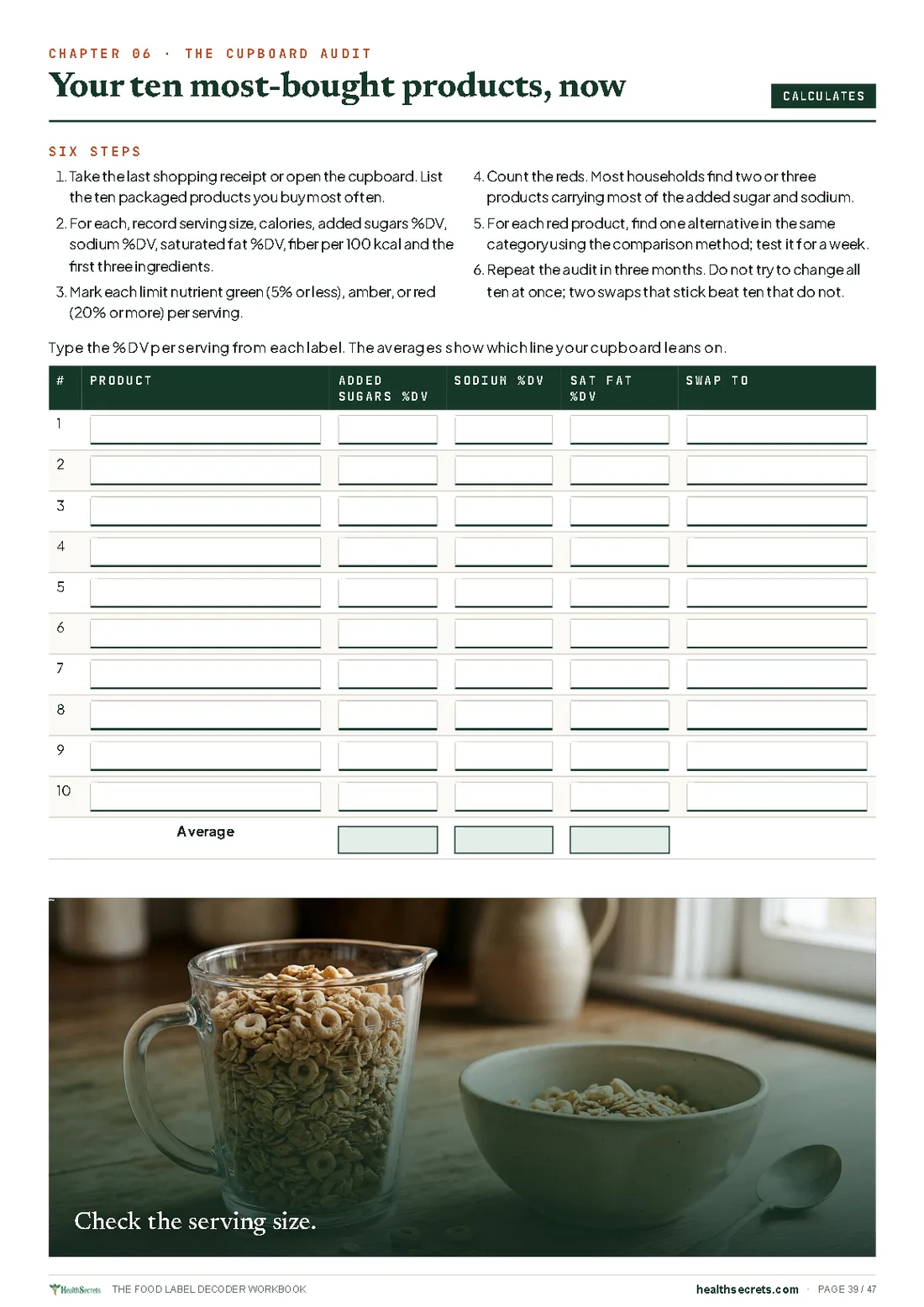 The cupboard audit: your ten most-bought products, averaged
 Turn the pack over.
 Compare like with like.
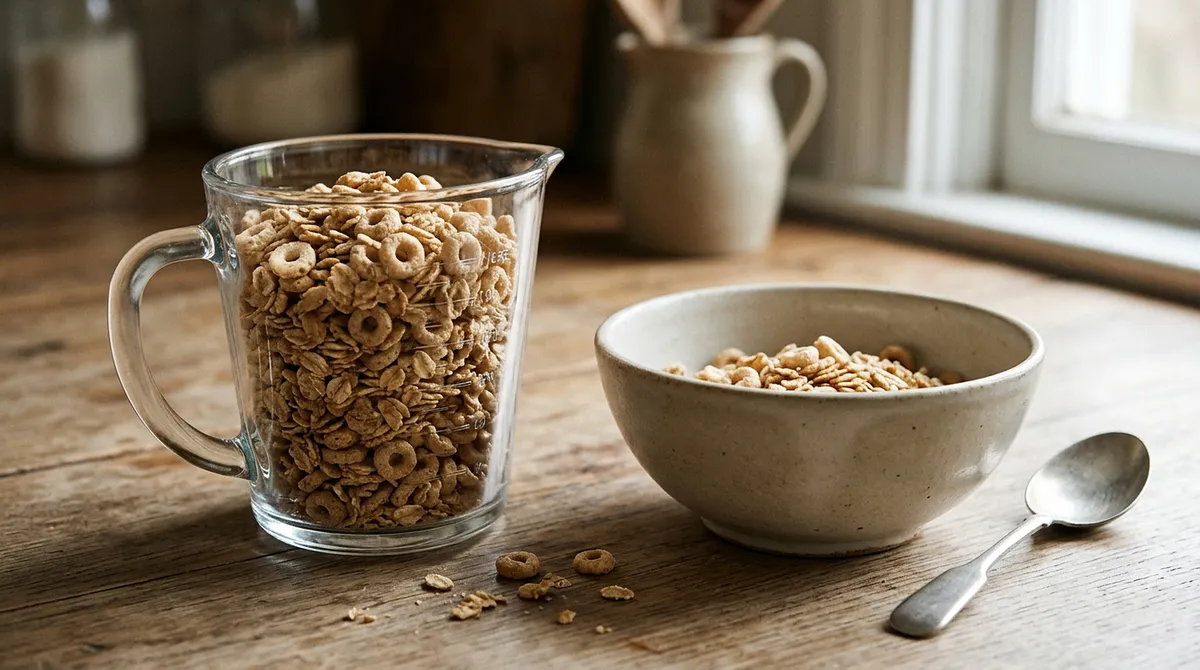 Check the serving size.
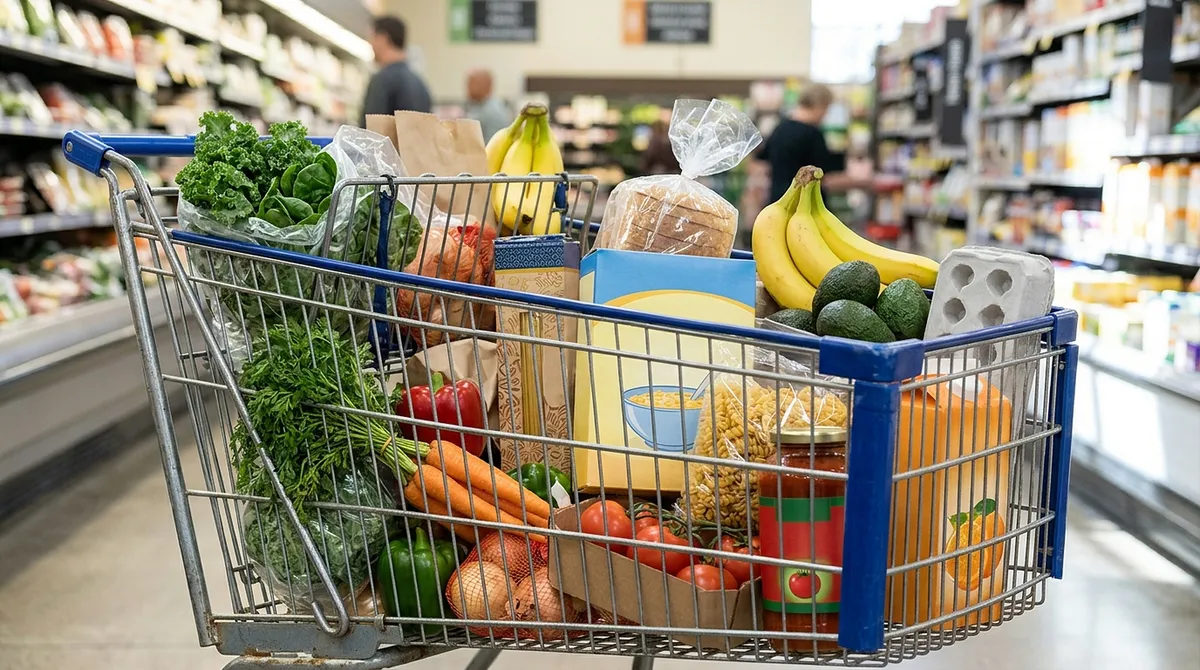 Fresh and packaged, side by side.